BAM starts on site as £13m Skinningrove flood alleviation scheme gets under way
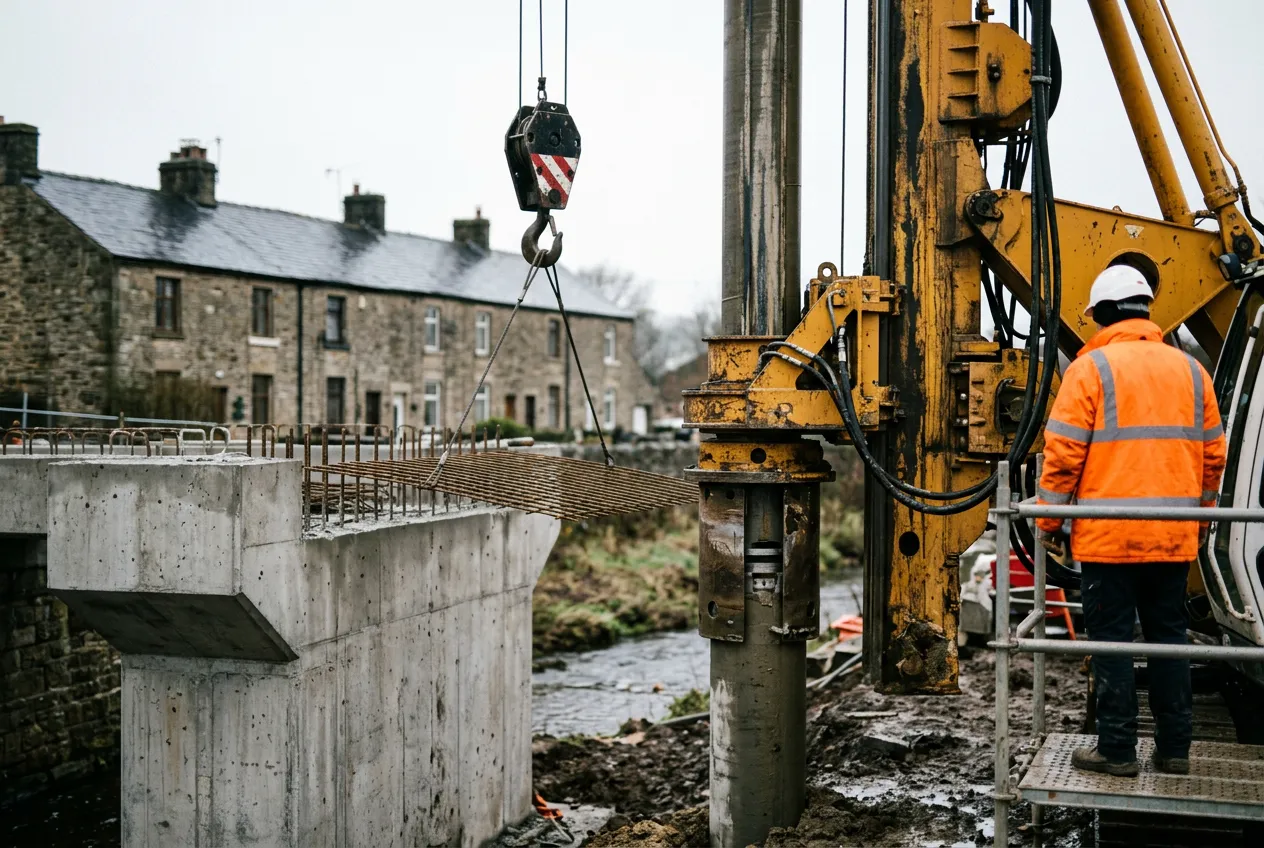
Construction has begun on a £13m flood alleviation scheme in Skinningrove, delivered by the Environment Agency in partnership with Redcar and Cleveland Borough Council. The works are due for completion in 2028.
The scheme is designed to give the village a long-term solution to flooding from Skinningrove Beck, protecting more than 100 homes and removing the need for residents to rely on manually operated flood gates.
What the works involve
Stone Row Bridge, along with its flood gates and parapets, will be demolished and replaced with a new bridge built between New Company Row and Zetland Row, next to the Riverside Building, the village's former school.
The programme runs in two phases. Work on the new bridge is scheduled from September 2026 to late 2027, with piled foundations and abutments installed on both sides of the beck before a crane lifts the new structure into place. Demolition of Stone Row Bridge and infilling of the existing flood walls will follow between December 2027 and early 2028.
A temporary access road will be provided for Grove Hill residents during construction. Planning permission was granted by Redcar and Cleveland Borough Council in February 2026, and the works are being carried out by contractor BAM.
What it means for local trades
Schemes of this type generate a long tail of subcontract work over the two-year programme: piling and groundworks, temporary access roads, traffic management, access platforms and reinstatement. Piling rigs and crane lifts of that scale usually bring in specialist scaffolding and access contractors, while site compounds, welfare and reinstatement typically fall to regional building and groundworks firms.
East Cleveland has seen limited large civils spend in recent years, so a project running into 2028 offers rare continuity for firms in the Loftus, Saltburn and Guisborough area rather than the short bursts of work more typical of the local pipeline.
Residents in the village have faced repeated disruption from the existing defences. Once the new bridge and revised flood walls are complete, the manual gate arrangement that has governed daily life during high water will no longer be needed.